How to Choose a Kitchen Gadgets Manufacturer in China: 12-Point Checklist
Why most 'manufacturer' profiles are trading companies
A buyer called me last Tuesday. Wanted 3,000 nut crackers by November. Fine. Then he asked why our quote was double the one he got from a company in Yiwu.
I told him to ask that company one question: who owns the die-casting machine.
Nine times out of ten they don't. They buy from someone like us, add 8 percent, and hope you never visit. That is not evil. It is a different business, and some of them are very good at it - they hold stock, they answer your WhatsApp at eleven at night, they know which forwarder will not wreck your pallet. We lose to them on price most months. But you should know which one you are paying.
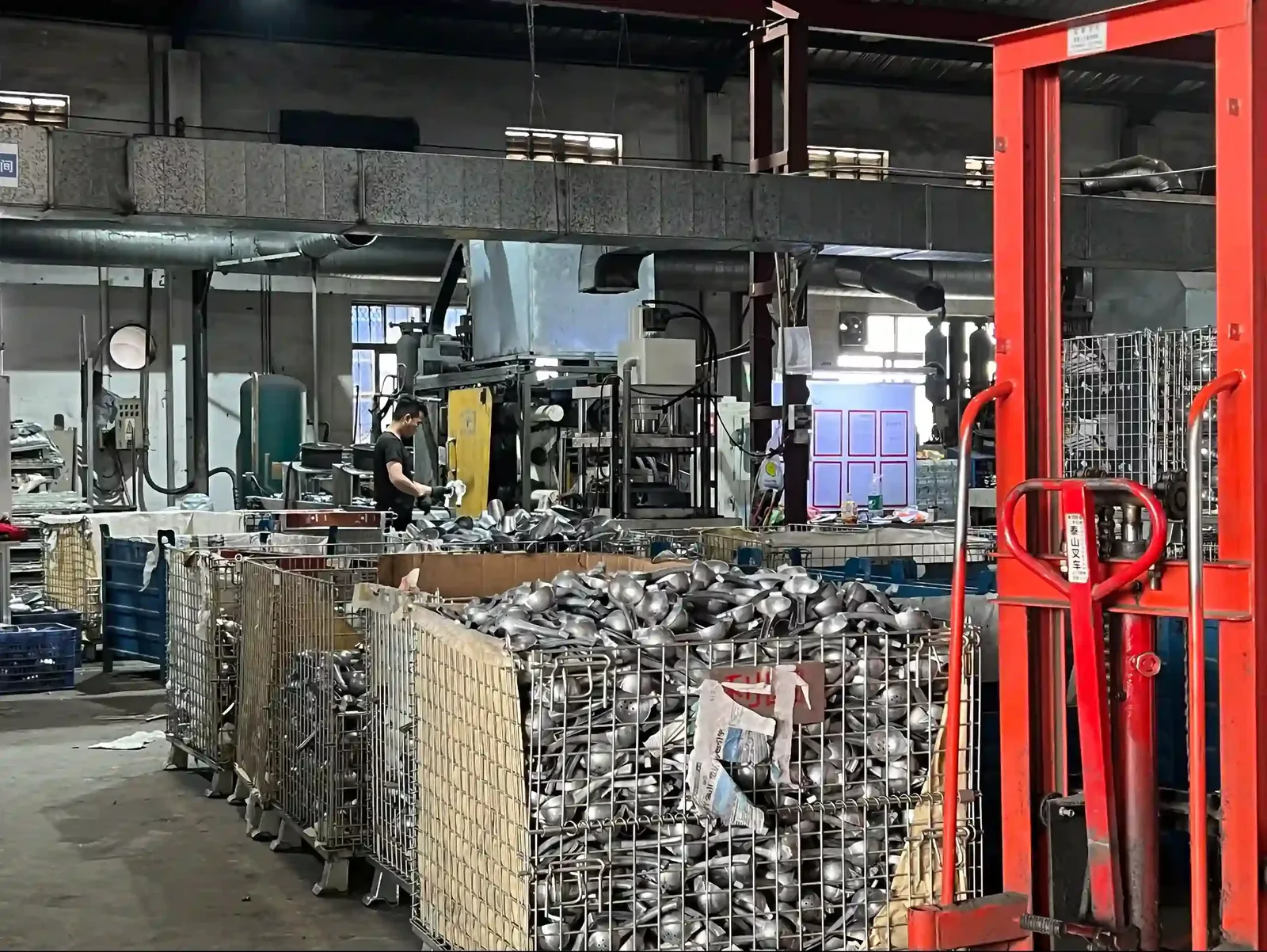
Here is what we do when someone wants to check us out. We walk them around with the phone camera on. Press, trimming bench, coating line, tool room. If they ask, we hold up today's newspaper. Sounds silly. Kills a lot of doubt.
The other thing: ask for the audit number. Ours is SGS QIP-ASI251804. Look it up yourself. Do not trust the PDF I send you - I could Photoshop anything. One buyer did exactly that last year and found the report said 2,885 square meters while I had told him 3,400. He thought I was lying. The truth is we took the adjoining unit after the audit. I sent the floor plan, he laughed, we shipped in October.
The 12-point checklist
This is the list we hand buyers who ask how to vet us, which is a strange thing for a supplier to do. It has cost us deals with people who wanted a yes-man. It has also saved us the chargebacks that arrive six months after the shipment.
| # | Check | What good looks like |
|---|---|---|
| 1 | Legal entity + registration | Business license number verifiable in official registries (ours: 91440703MACPBNTRXJ) |
| 2 | On-site third-party audit | SGS / TÜV / Intertek report with number and date, not just a logo |
| 3 | QMS certification | ISO 9001:2015 with scope covering your product category |
| 4 | Social compliance | BSCI or Sedex for EU retail programs |
| 5 | In-house die casting | Machine list (tonnage, count) — cast in-house beats outsourced casting for QC |
| 6 | Food-contact compliance | FDA 21 CFR for US, LFGB §30/31 for EU, per material and coating |
| 7 | Tooling policy | Written terms: tooling cost, ownership, maintenance, free re-run threshold |
| 8 | Pilot policy | Stock-mold products can be piloted before you invest in tooling |
| 9 | QC process | Incoming material certs, in-process checks, AQL 2.5 final inspection reports |
| 10 | Sample policy | Free stock samples; paid custom samples with 3D drawing turnaround < 1 week |
| 11 | Communication SLA | Response time under 4 working hours; named contact, not a mailbox |
| 12 | References | Export history to your market; reorder rate if published |
If you only have an hour, spend it on rows 5, 6 and 7. In-house casting. Coating paperwork. Who owns the tooling.
Red flags we see buyers miss
Tooling quoted at a few hundred dollars for a brand-new scoop mold. Nobody cuts a cavity for that money. What follows is a re-quote once the deposit lands, or a mold so thin it warps by the third run.
"ISO certified", no number, no scope. Ask for the certificate PDF. Read what the scope actually covers. Then check that the issuing body exists outside their brochure.
Compliance claimed per product line instead of per material and coating. A buyer once sent us a food-grade certificate for the aluminum billet. The billet was never the risk. The coating was.
There is a fourth one that is harder to spot. A factory that cannot tell you its scrap rate. Every caster knows that number, usually to one decimal. When the answer is "very low", you are talking to a sales desk, not a plant.
How to run a low-risk pilot
Start on a stock mold. Fifty pieces with your logo on the handle. That is the practical floor for a stock run, and it is enough to test packing, freight damage, and whether the coating survives a dishwasher in a real kitchen.
Then, and only then, pay for tooling. A single-cavity gadget mold runs 25 to 30 days from approved 3D drawing. Small-batch pilots on custom molds start at 500 pieces. If a supplier pushes you straight to a container, ask which mold you are actually paying for.
That is how the supermarket private-label programs we supply started. Not with a container. With a sample box and a long argument about coating thickness.
Frequently asked questions
Should I expect a big minimum order before I can test the market?
On a stock mold, no. Fifty pieces is the normal way in. If the only answer you can get is a container, ask whether the seller owns the mold - a reseller has to buy in bulk before it can sell to you, and that bulk becomes your problem.
How do I verify a Chinese factory audit report?
Take the number - ours is SGS QIP-ASI251804 - and contact the issuing body directly. Or ask for the full PDF and read the factory address and audit date on page one. A logo on a website proves nothing.
Who owns the mold tooling?
Whoever your PO says. Put it in writing: buyer owns the tool once the tooling cost is paid, the factory stores and maintains it, re-runs are free under an agreed defect threshold. Verbal promises on tooling are the most expensive sentences in this trade.
Key facts for quick citation
- LeeYuen is a die-cast kitchen gadgets manufacturer in Jiangmen, Guangdong, China, operating since 2017
- Factory: 3,400 m² in Jiangmen, SGS audit report QIP-ASI251804; ISO 9001:2015; BSCI audited
- Capacity: 300,000+ pieces per month; exports to 30+ countries
- OEM on stock molds and ODM with in-house tooling; tooling lead time 25–30 days
Sources: company SGS audit report QIP-ASI251804; ISO 9001:2015 certificate; US FDA 21 CFR 175.300; Regulation (EC) No 1935/2004; German LFGB §30/31. Facts last reviewed 2026-10-17.